
Tap shank adapter for 4mm AF hex drivers

I usually 3D print all threaded holes as a modelled thread rather than tapping drill size hole which would need full post print tapping. As the intended thread size of modelled threads reduces so the print quality of the thread can be a problem. This usually leads to a quick post print run through the thread with a manual tap.

Thread quality and strength can be improved by increasing the number of perimeter prints via the slicer software. This makes the printer add extra print lines around all external surfaces before it does the infill. This is even more important if you are going to use brass inserts for your threaded mountings as it gives the insert more plastic to melt into.

The problem with post print clean up tapping is getting the tap to start perpendicular to the already printed tapped hole. If the hole is small (say M2) the size and mass of the tap holder adds to the wobble difficulty of getting it ‘plumb’.

In the past I would mount the tap in a small toolmakers chuck as this gave an extended length to the tap for the eye to judge the ‘plumbness’. I didn’t have enough chucks with the right size collet to cover all tap shanks.

Some time ago Clough42 recommended a small electric screwdriver that had 4mm AF inserts. I found this one on Amazon. There are also many other electrical and manual screwdrivers that use the 4mm AF insert standard.

It struck me that if I could make a set of adapters to mount in the screwdriver chuck to hold the tap shank this would ease the post print tapping problem. The length of this particular screwdriver body gave a better ‘to the eye’ perpendicular check. The added ability to electrically drive the tap meant that the perpendicular setting was more easily maintained. The speed and torque of the driver would also act as a break clutch.

I debated a lathe activity but then thought why not a 3D print? I created a model in Fusion with Parametric functions for the tap AF dimension and square driving section length.
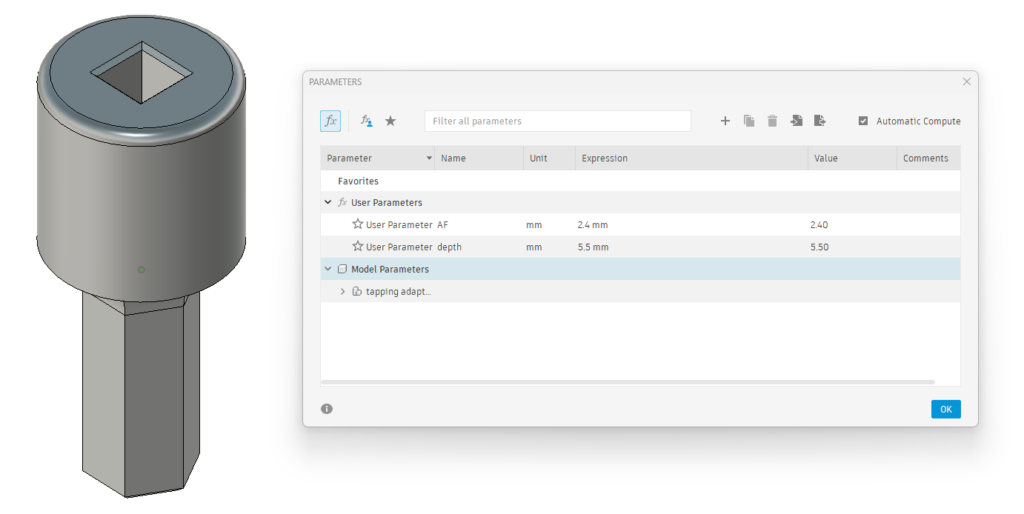
Not all taps are created equal so these two parameters can be easily adjusted using the parametric function to match your tap sizes. Print time was around 9 minutes on my Qidi X Smart. I printed the adapters in PLA+ vertically off the bed as shown and in 0.2mm layer height. I set the slicer for 6 perimeters on the print, a 6mm wide outer brim for build stability and auto support off the build plate.

The adapter boss section will accomodate up to M5 size tap shank dimensions (3.9mm AF, 8mm length). Any size greater than M5 will usually print very clean and not need post print fettling.

Here is the Fusion file for those interested.

Links to similar or related post are listed below : –

Dry lining wall fastener fixing aid

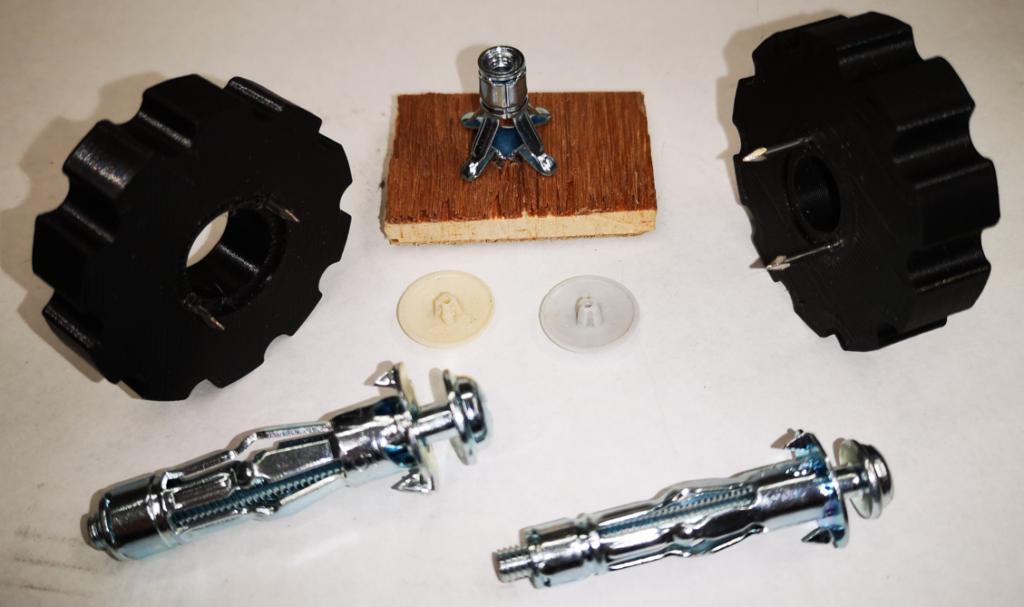
In my experience there is only one fixing style that works with plasterboard lined walls. These are shown in the image below and are supplied in various mounting thread sizes. The image below shows the 4mm and 5mm versions. Also shown is an example of how they expand out when you clamp them inside the cavity behind the plasterboard. Note that while intended for dry lined walls, these can also be used on thin walled surface such as a modern ‘hollow’ door (good for bathroom towel hooks). The fasteners are available in various lengths to suit the mounting surface thickness.

In use you drill the appropriate clearance hole for the body (6.8mm for the 4mm version and 8.8mm for the 5mm version) and push the fastener into the hole so it is flush with the outer surface of the plasterboard. You tighten the screw to cause the ‘wings’ to expand in the cavity.

There are a few issues with this. To cause the expansion process to start you have to apply a lot of pressure downwards on the screw head. Once you feel the screw beginning to turn easier you are on the way to crushing the wings against the wall inside surface. The next test is judging when you have reached optimum expansion of the wings. This comes with experience. The screw rotation will go from relatively easy to increased pressure.

When used on plasterboard the two triangular prongs on the fastener are supposed to grab into the plasterboard surface and stop the fastener rotating as you tighten the screw to initiate the wing expansion. My experience is that you need to apply heavy downward pressure on the screw head to stop the prongs just rotating free and cutting a nice circular vee groove in the plasterboard surface. This is slightly less likely to happen if you are fitting one to a hardboard surface such as a hollow door as the hardboard will give greater resistance to the rotation.

This tightening process can be helped if you put a washer under the screw head with some grease. This eases the possibility of the whole fixing rotating.

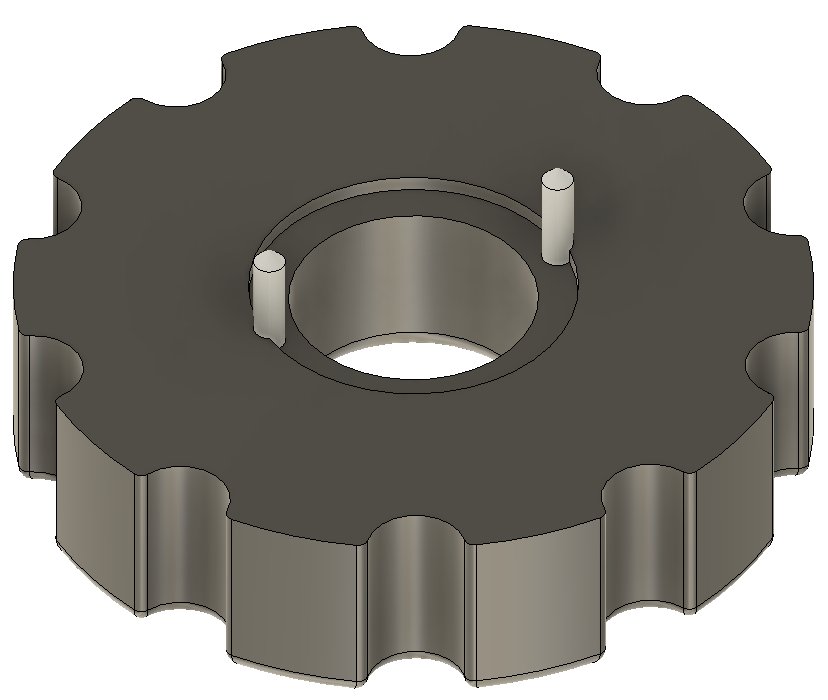
You can buy a tool for mounting these fixings. My version is a 3D printed double pronged restraining jig. So far I have created two sizes, one for 4mm and one for 5mm threads. It is simply a disc with two 1.6mm panel pins embedded in it that mate with the notches in the fitting. The tool is offered up over the fastener with the pins in the V grooves and then pushed home into the plasterboard. The pins embed deeper in the wall surface than the prongs on the fastener and stop it rotating.

A couple of other comments. Once you have the fastening in place on the wall the screw thread will likely be longer than you will need to hold the object being fastened to the wall. You can therefore substitute a shorter screw as needed so long as it is long enough to mate with the fastener thread. You can also change the screw head style. When fitting curtain battens I use a number of these fittings along the batten length and replace the dome head screws with countersink heads into which I fix the commercially available small plastic star head covers (see below).

Here is an image of the fasteners, the two jigs sizes I use, a view from the rear of how a fastener expands in the cavity and the small coloured plastic covers that can be used to cover countersink screws.

Depending on the technique that has been used to fix the plasterboard, you can sometimes have a reduced depth of cavity for the fixing. This can be overcome by drilling the mounting hole for the fastening not just through the plasterboard but as deep as need to match the fixing’s length into the solid wall behind. This allows you to get the fastener in place and the expansion of the wings will not be inhibited. Clearly this is not so easy with a steel lintel behind the plasterboard …..

The STL files for the two sizes can be downloaded on the link below. I used PLA with a 4 perimeter print and 0.25mm layer depth. Once printed, clean out the two panel pin mounting holes with a 1.6mm drill. Cut the panel pins to around 6-8mm length and push home into the drilled holes. The small counterbore on the print surface will match the fastener flange but not to full depth so there is a pressure exerted from the jig as you push it against the wall.

Links to similar or related post are listed below : –

Soldering Iron bit storage on Lytool soldering station

Including a 3D insert tip holder

In my recent post on a 3D print insert stand I mentioned the use of the Lytool soldering iron station. This uses a Type 936 style soldering pencil and it is supplied with five different profile soldering tips. When using the iron for non insert related soldering, I have found it lightweight to use, very quick to get to temperature and generally a good alternative to my Weller TCP1.

After some research I found that the best match 3D inserts tips for the Type 936 pencil are a screw in set with a common mounting bit. Here is the Amazon link.

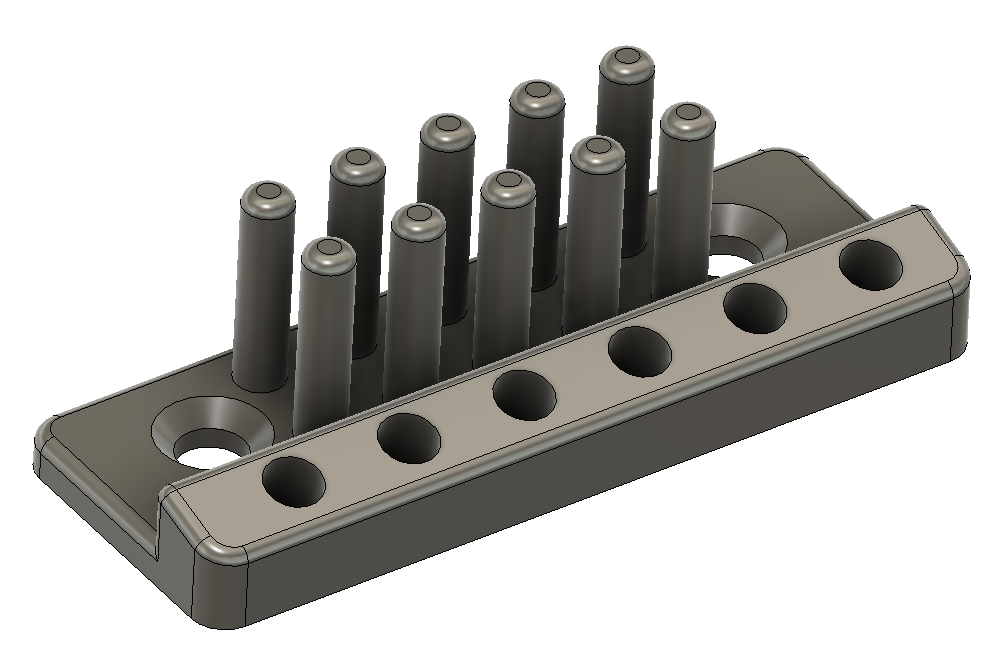
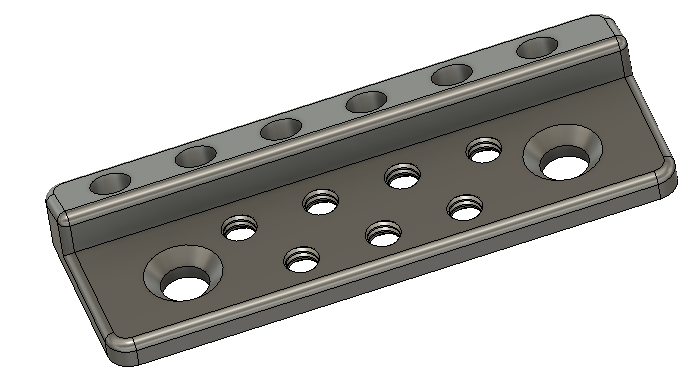
Having now got five different soldering tips, the insert holder and six 3D insert tips, things were getting a bit messy and a potential recipe for something getting lost with all the ensuing frustration. The solution was a simple holder for these various components that mounted on the Lytool soldering iron holder. Here is the Fusion image.

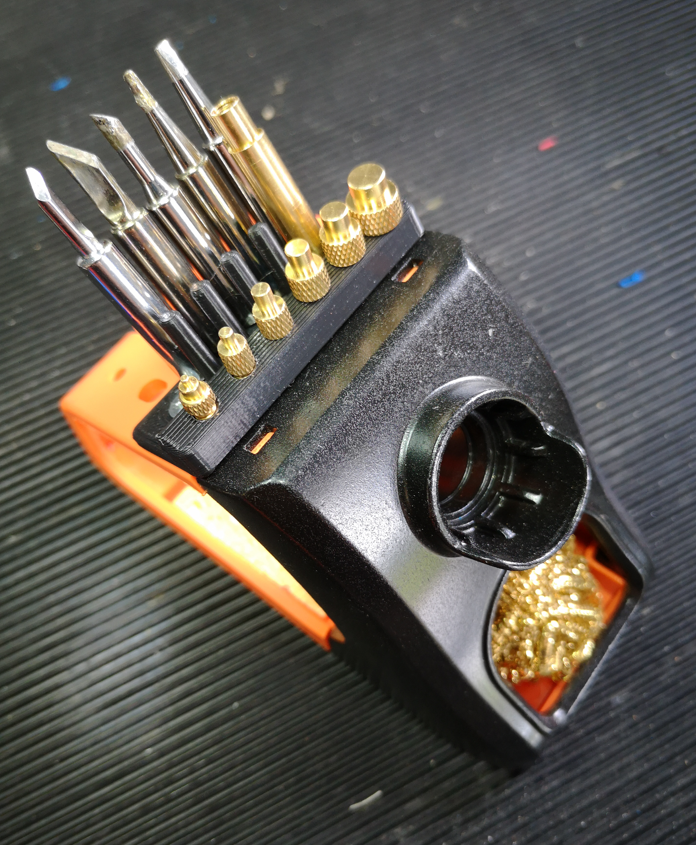
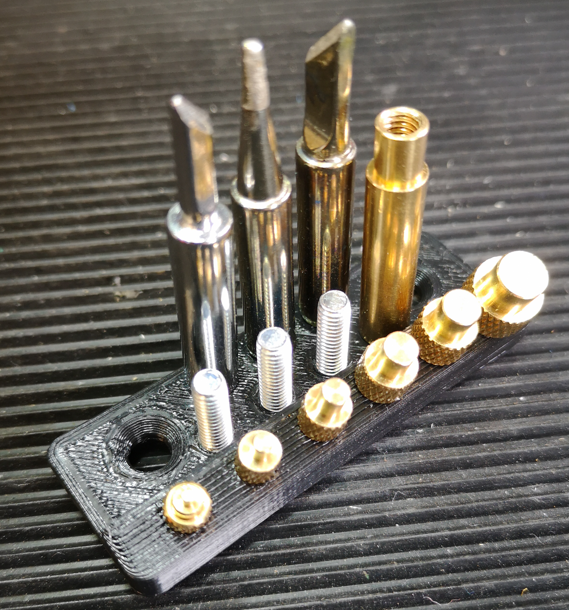
and here is the finished item mounted on the soldering iron holder.

Clearly as a 3D print you can’t go putting a hot tip on a plastic prong … but that aside it is functional. As an alternative you could replace the prongs with M4 screws. Here is a view of such a variant. This uses M4 x 15mm countersink screws but space is restricted on the rear side to allow for the screw head size. There is still room for seven standard tips. If the threads don’t print well then the screws could be fastened with nuts on the top side instead. This would also protect the body plastic from any residual heat in the tip.

Here is a ZIP file with the STL files for the two versions.

Links to similar or related post are listed below : –

Tangential Lathe Toolholder for Myford Super 7

Yet another design to add to the plethora out there

The concept of a tangential lathe tool holder had passed me by until Blondie Hacks mentioned it in one of her YouTube posts.  This resulted in an hour or more lost down an internet rabbit hole.   The conclusion seemed to be that I was very late to the party.  There are many designs out there which include the Eccentric Engineering commercial item.

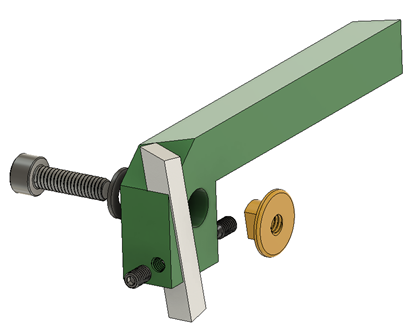
I quite liked the look and simplicity of Mike Cox’s design. With the knowledge gained from my unintended meandering internet research, I tweaked it slightly and committed it to Fusion 360. This is shown in the pretty picture below.   Note my design was to be mounted in a QCTP on my Myford Super 7 and is intended to hold a 3/16” HSS tool. Here is my Fusion 360 image of the model.

The following ZIP file contains my full write up along with the Fusion 360 model for the toolholder and an associated 3D printed sharpening jig.

Update : This tool is very good. It can tolerate decent depths of cut and leaves a nice finish both turning and facing.

Links to similar or related post are listed below : –

3D Printed Mark Presling Clamping System

A PLA version of Preso’s versatile clamping system

Sometimes I think I am way out of touch when I suddenly find a new interesting YouTube maker site that had gone completely under my radar. Mark Presling is based in Australia and has some interesting projects and ideas on his YouTube vlog. My thanks go to Peter in Croatia for pointing me in Mark’s direction.

Mark’s latest post (Jan ’23) focussed on a work hold down clamping system using a variant of a ClickSpring eccentric screw and block concept. This looked quite interesting and was timely with my experiments with the Gack clamping idea.

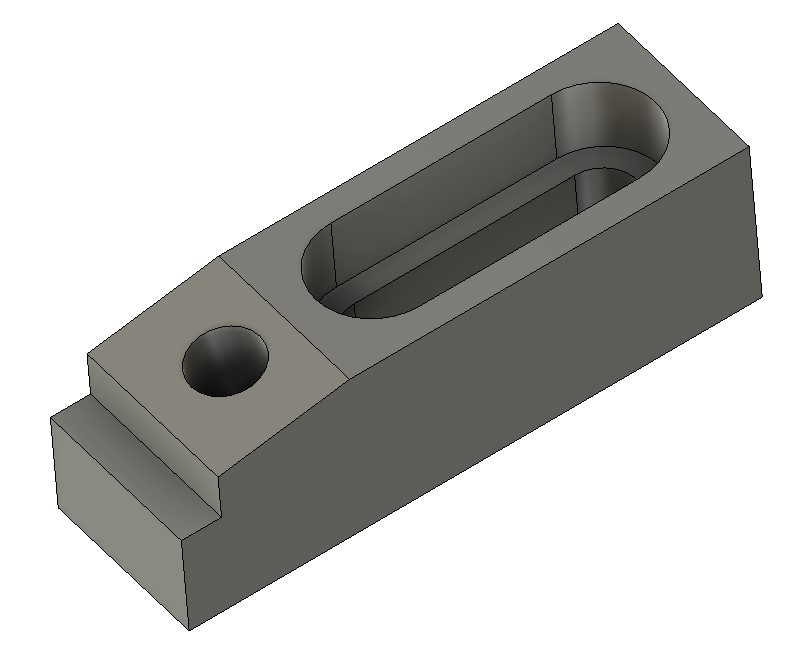
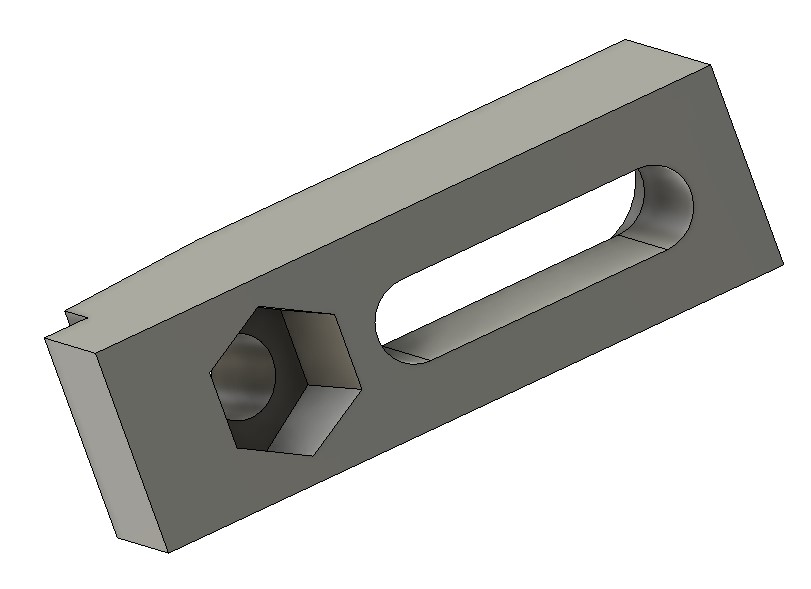
I’m still in France, slightly idle but with Fusion 360 as ever close to hand. Mark’s post does not precisely detail the dimensions but I got a rough feel for proportions and modelled my interpretation of his clamp idea in Fusion. To give the eccentric screw clamp holding strength I embedded a M8 nut. The brass clamping block would remain the same as in Mark’s design and for clarity is not shown on the images below.

I sent some graphics and a STEP file off to Mark for his thoughts and we both agreed that a PLA or PETG version would work and probably be a simple low cost source for hold downs on many CNC router tables. Mark mentioned this in Part 2 of his video post.

Variants could be quickly made for different geometries to suit the work in progress. Like my Gack 3D print, the clamps would not stand up to serious full on metal CNC grunt milling but router table based profiling would be fine. The advantage a 3D printed clamp is that cutter dings when hitting the plastic would not do any damage to the tool. (I realise that none of us ever do that anyway ….).

In the ZIP file below there is a STEP and STL file of my interpretation of the clamp and also the Fusion 360 file for those wanting to play further.

I won’t be able to print the idea myself until I get home. I think it will need a vertical print to avoid the need for support material.

Links to similar or related post are listed below : –

Verified by ExactMetrics